
Healthy Boundaries: Staying Present Without Losing Yourself
Audio Version
“Set boundaries.”
It’s a common phrase now, but often misunderstood. For many people, boundary-setting has become associated with avoidance, shutting people out, or ending relationships the minute something feels uncomfortable.
But that’s not what healthy boundaries are, and it’s not how healing works.
Healthy boundaries help you stay connected while honoring your emotional well-being. They’re a way of telling the world, “Here’s how I show up, and here’s how I need to be treated.” According to National Institutes of Health (NIH), clearly communicating your needs plays a powerful role in managing stress and emotional health.
When you set boundaries from a calm, grounded place, you create more stability, not more distance.
Boundaries Don’t Mean Cutting People Off
Many people fear that boundaries will make them come across as cold or rigid. But true boundaries are neither harsh nor aggressive. They sound like:
- “This isn’t a good time for me, let’s talk later.”
- “I need to take a break before we continue.”
- “I care about you, and this is what I can offer today.”
This is connection with clarity.
This is communication with compassion.
Stanford University notes that assertiveness,not silence or over-explaining, is the key to building strong, healthy relationships. Boundaries help you do exactly that.
You Decide How You Participate
You can’t control what others do, but you can control how you respond, how much energy you give, and what you tolerate. Healthy boundaries allow you to shape your emotional world intentionally.
You get to choose:
- What conversations you’re open to
- How much access people have to your time
- What behavior you no longer accept
- When you need space to recharge
In communities like Durham, Hillsborough, and Morrisville, clients often share how learning to set boundaries transforms everything, home life, work demands, parenting, friendships, and even self-talk.
Boundaries Are Shown Through Action, Not Explanations
You don’t have to justify every need you have.
Healthy boundaries look like simple, steady behaviors:
- Choosing not to respond immediately
- Ending a conversation when emotions escalate
- Saying “no” without guilt or over-explaining
- Creating downtime for yourself
- Protecting your mental and emotional space
These actions help you stay grounded and clear, even in stressful moments.
Self-Awareness: The Foundation of Every Boundary
Healthy boundaries start with checking in with yourself.
Ask:
- “What do I feel right now?”
- “What do I need to feel supported?”
- “What drains my energy, and what restores it?”
- “How can I communicate this honestly?”
Once you understand your own limits and needs, communicating them becomes much easier, and more natural.
How Carolina Counseling Services Helps Durham Clients Build Healthy Boundaries
You don’t have to navigate boundary-setting on your own.
At Carolina Counseling Services, we help clients in Durham, NC, explore their emotional needs, communicate more effectively, and create boundaries that support healthier, more fulfilling relationships.
We also welcome clients from surrounding areas like Hillsborough and Morrisville, offering support for stress, communication, anxiety, relationship concerns, and overall emotional wellness.
We can provide services for individuals with Aetna, Aetna State Healthplan, Blue Cross Blue Shield of North Carolina, Tricare, and many of the Medicaid policies to include Alliance, Carolina Complete Health, Wellcare, Healthy Blue, and United Healthcare insurance.
Whether you want to stop people-pleasing, strengthen your self-worth, or learn to speak your needs without fear, our experienced therapists and psychiatric medication management providers are here to help you build boundaries that feel grounded, compassionate, and aligned with who you’re becoming.
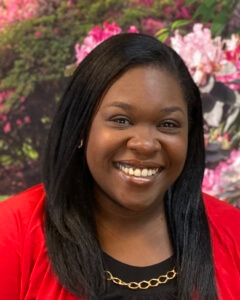
Ebone L. Rocker, LCMHCS, is one of the Owners and Vice Presidents of Carolina Counseling Services. She is a Licensed Clinical Mental Health Counselor Supervisor in the State of North Carolina.

 The Teacherage offices are Accessible with an Accessible restroom.

 PO BOX 9909 Fayetteville, NC 28311